Horizontal Directional Drilling
Horizontal Directional Drilling is another option for installation of underground power cables in directionally drilled boreholes, lined or unlined. Some of these HDD crossings exceed several thousand feet in length and depths in excess of 100-ft.
Heavy congestion and varying depths of existing utilities make it difficult for conventional shallow trench excavation for buried cables
In many instances such as river crossings coupled with environmental restrictions lend no other option but directionally drilled boreholes for such installations
-
Concerns with respect to the external thermal environment of such cable installations are:
Depth of burial below ground surface
Water table
Thermal resistivity of the soil(s) down to the burial depth
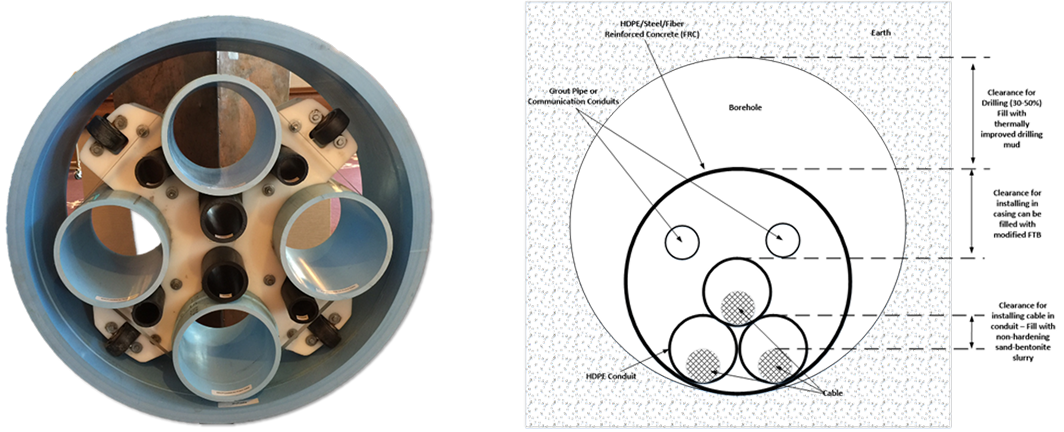
Annular space between the casing and the borehole wall
Thermal resistivity and stability of the material around the cables or the cable pipe (drilling mud, special backfill)
Use of pumpable thermal grout to mitigate high resistivity air space within the casing and conduits
Design and installation of thermal grout (pumpability, thermal resistivity, heat of hydration, rater of hardening, etc.)
In-situ soil temperature and thermal resistivity measurements are conducted at several depths (proposed cable burial depths up to entry and exit points).
Collecting soil samples (Shelby tube, Modified California Liner or bulk material from auger cuttings)